

Is El Salvador safe?
Two weeks on the ground: the streets, the figures and my travel advice.
Around twenty payments filmed, and some refusals too: where bitcoin works in El Salvador in 2026, what the 2025 law changed and which wallet to use.
You often hear that nobody in El Salvador accepts bitcoin any more. I spent two weeks there in May 2026 with a simple idea: pay with bitcoin wherever it was possible, and film every attempt.
The result: around twenty successful payments, from $2.48 for a coffee to $71.50 for a dinner by the sea. And a fine string of refusals, especially on the first day. Bitcoin in El Salvador is neither the paradise promised in 2021 nor the total failure it's sometimes described as. It's more interesting than that.
In short: yes, you can pay with bitcoin in El Salvador in 2026, but not everywhere. Since the January 2025 reform, each business chooses whether to accept it. In places linked to Bitcoin, such as El Zonte and Berlín, and in some cafés and hotels, it works very well, over Lightning, in a few seconds. At markets and with street vendors, it's almost always cash dollars. Take a Lightning wallet and some dollars in cash.
Not really, and this is where many articles get it wrong, one way or the other. In September 2021, El Salvador became the first country in the world to make bitcoin legal tender, alongside the dollar: every business was supposed to accept it. In December 2024, the country reached a loan agreement with the IMF worth about $1.4 billion. One of the conditions: making bitcoin optional.
That has been the case since the reform passed on 29 January 2025. The law still speaks of "curso legal", but the word "moneda", currency, has disappeared. Nobody is obliged to accept bitcoin any more, and taxes can only be paid in dollars. The state has also pulled out of Chivo, the public wallet launched in 2021.
On the ground, the phrase that best sums up the situation is this one: before, bitcoin was compulsory on paper. Today, each business chooses. Andrés Posada, a Salvadoran who works in Bitcoin media, also pointed out to me that in practice, it has always been more or less voluntary.
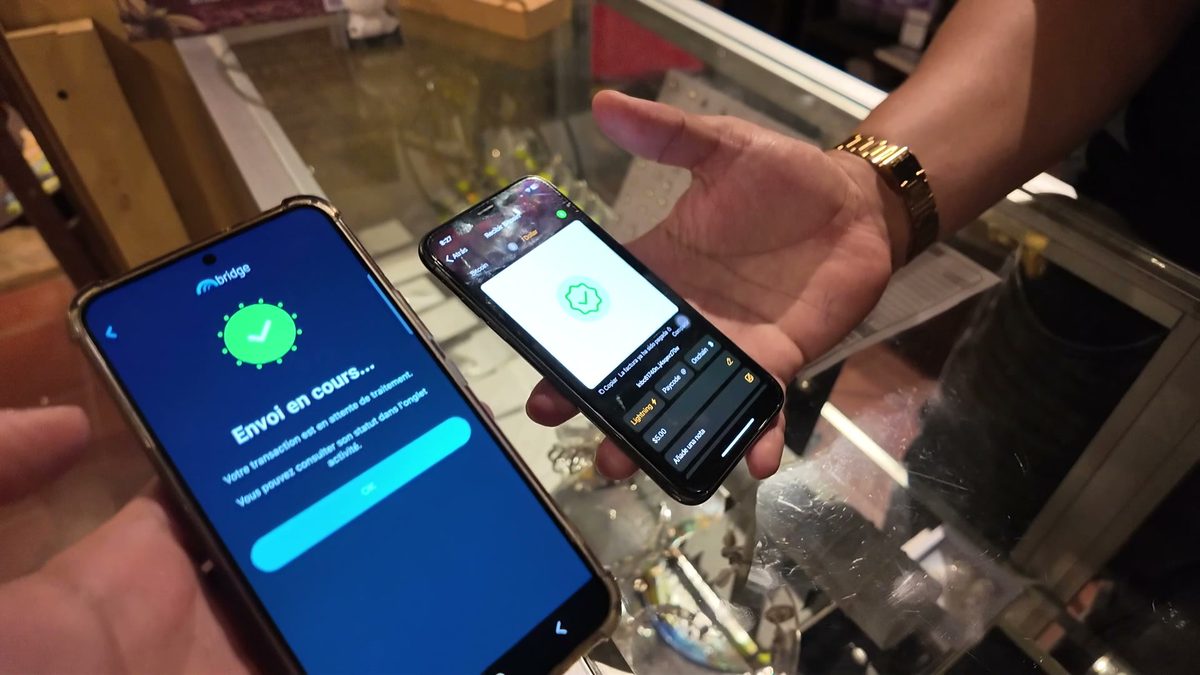
I made all these payments with Bridge Wallet, the Swiss app from Mt Pelerin, a partner of my El Salvador series. So did Adriana, for her very first bitcoin payment, in Ataco. The amounts come from the screens I filmed.
| Place | Town | What I paid for | Amount |
|---|---|---|---|
| Café Fulanos | San Salvador | a coffee | $2.48 (3,091 sats) |
| Good Beans | San Salvador | a hot chocolate | $3.30 (4,110 sats) |
| Dos Mundos | San Salvador | coffee | $36 (44,801 sats) |
| Café del Centro | San Salvador | a drink, at night | 6,139 sats |
| Bitcoin bar | Concepción de Ataco | a drink | $5 (6,174 sats) |
| Casa 1800 | Concepción de Ataco | Adriana's bill | $7.15 (8,865 sats) |
| Small shop | Apaneca | two beers | $3 (3,674 sats) |
| The Standard | Berlín | beers | 7,600 sats |
| Finca Miramar | near Berlín | a dinner | $22 (24,777 sats) |
| At the market | Berlín | fresh fruit | 10,501 sats |
| El Hoyón volcano | near Berlín | our guide, Don Julio | 37,778 sats |
| Olivos | Suchitoto | a meal by the lake | $17.35 |
| Casa 1800 | Suchitoto | a cocktail | 12,137 sats |
| Nan Tal | El Zonte | a dinner | $71.50 |
| Mama Rosa's | El Zonte | an order | 7,187 sats |
A few moments stuck with me. In Apaneca, the two beers were paid into the shopkeeper's Chivo, the government wallet. At Finca Miramar, the waiter first had to ask his boss where the QR code had gone. And at the El Hoyón volcano, near Berlín, a volcano that's not touristy at all, even the guide gets paid in sats.
El Zonte, Bitcoin Beach. This is where it all began. In 2019, an anonymous donor gave bitcoins to the community of this surfing village, on one condition: never to change them into dollars. The Bitcoin Beach project was born there, driven in particular by Mike Peterson, an American who settled in the village, and Román Martínez. At the end of October 2026, BTC Map listed 75 businesses there, almost all of them verified within the year. Being there, I really felt that life on bitcoin was possible: almost everyone accepts it. At Mama Rosa's, who is described as one of the first shopkeepers in the country to accept bitcoin, I obviously paid in sats.
Berlín. A small town of about 20,000 inhabitants, more than 1,000 metres above sea level. At the Bitcoin centre in Berlín, they explained to me that they started from zero, about three years ago. At the beginning of November 2026, BTC Map listed 119 places there within a 3-kilometre radius. The merchants, for their part, generally change their sats into dollars. Right next door, the geothermal power plant has been mining bitcoin for the state since 2021.
The cafés of San Salvador. Fulanos, Good Beans, Dos Mundos: among the speciality coffee shops in the centre, several display "Preferimos bitcoin" on the door. At Good Beans, another customer was paying in bitcoin just before me.
The Ruta de las Flores. In Ataco and Apaneca, I found a bitcoin bar, a hotel that accepts it, a family-run guesthouse ready to take everything in bitcoin, and even a map of businesses that give a 5 to 21% discount when you pay in bitcoin.
On the first day, alone in San Salvador, I got refusal after refusal. The first café said no, then gave me the coffee on the house. The pupusa seller wanted dollars. At the Ex Cuartel market, it was dollars or a bank card. At the Mercado Central, no for the alguashte, no for the beer, no for the chocolate. My conclusion that evening: in this neighbourhood, for now, it's the US dollar.
Even in the bitcoin towns, nothing is automatic. At the Pool Party in Berlín, it was impossible to pay the entry fee in bitcoin: the person who had the phone wasn't there. Card payments, on the other hand, went through. On the Ruta de las Flores, one café simply told us they didn't have that.
And then there's Chivo, the wallet launched by the government in 2021. I never managed to open an account, neither with my Swiss number nor with Adriana's Peruvian number. On the merchants' side, one vendor warned us that Chivo payments took a little longer. And the shopkeeper in Apaneca had lost the code to access her wallet. In May 2026, the state also sold a majority stake in Chivo to a private American group, which is preparing a new version. The accounts still exist, but the app's future on the bitcoin side remains unclear.
In El Salvador, small payments go through Lightning, Bitcoin's fast payment network. The merchant types in the amount in dollars, their app displays a QR code, you scan it and it's settled in a few seconds. A wallet that only sends on the main blockchain won't be much use to you.
On the merchants' side, the most widely used is Blink, formerly the Bitcoin Beach Wallet: that's what Andrés told me, and I saw it displayed on several doors. Some restaurants use a point-of-sale system such as IBEX Pay, at Nan Tal for example.
On the visitor's side, any Lightning wallet will do. I paid for everything with Bridge Wallet, Mt Pelerin's Swiss app, the one I use every day. If the difference between a self-custody wallet and an account on a platform isn't clear to you, I explain it in where are bitcoins stored.
My advice: install your wallet and test a small payment before you leave. The day you need it, in the sun, with the waiter waiting, is not the time to discover the app.
Bitcoin ATMs have become scarce. According to the Coin ATM Radar directory, only 22 are left in the country, against 205 in 2021. But that directory doesn't count everything: according to Athena's annual report, the network of Chivo ATMs it runs still had 194 machines at the end of 2025. Their future since the sale of Chivo is unclear. In Apaneca, I tested an ATM designed to work without internet. It gave out a maximum of $35, with a 5% fee, and we had connection problems. Useful in an emergency, not for funding your trip.
The figures prove both camps right. On the one hand, everyday use remains a minority thing: according to the annual survey by the UCA university, 8.1% of Salvadorans paid with bitcoin in 2024, against 25.7% in 2021. And from January to September 2026, diaspora remittances in crypto made up only 0.68% of the total. On the other hand, BTC Map lists nearly 1,300 businesses in the country, and the state keeps adding bitcoin to its reserve: 7,839 bitcoins on 19 November 2026, according to its own online tracker. According to the IMF, these additions now come from private donations, not public money.
One detail goes a long way to explaining my refusals on the first day. Around San Salvador, BTC Map shows more than 400 places, but barely 5% have been verified within the year: many listings are probably out of date. In El Zonte and Berlín, on the other hand, almost all are up to date.
My conclusion after two weeks: not everywhere, but very real. In working-class neighbourhoods and at markets, the dollar reigns. In places where communities have carried the project, such as El Zonte and Berlín, living on bitcoin day to day is already possible.
My advice to anyone going: open BTC Map often, and pay with bitcoin left, right and centre. Not to spend your bitcoins at all costs, but to get people used to accepting it. Every payment counts.
No. Since 2025, no business has been obliged to accept it. Count on bitcoin in the places that display it, in El Zonte, in Berlín and in some of the tourist cafés, hotels and restaurants, and on the dollar everywhere else.
No need. In fact, I never managed to open an account with a foreign number. Any Lightning wallet can pay a merchant who takes payments on Chivo: that's what I did in Apaneca. And since Chivo was sold to a private group, in May 2026, its future on the bitcoin side remains uncertain.
No, but it has changed strategy. Bitcoin is no longer compulsory, the state has pulled out of Chivo and taxes are paid in dollars. On the other hand, the country is keeping its bitcoin reserve, which continues to grow, and communities like El Zonte and Berlín have never stopped using it. What has receded is bitcoin imposed by the state. Bitcoin chosen by the people is still here.
It depends on how much of your spending you want to pay in bitcoin. In places that accept it, expect the same prices as in dollars: a speciality coffee between $2 and $3, a meal between $5 and $20. Our dinner at Nan Tal, in El Zonte, came to $71.50. Keep most of your budget in dollars, and a reserve of sats for the places that accept them.
Two weeks on the ground: the streets, the figures and my travel advice.
A 100% bitcoin week: where it works, where it falls down, and how to go about it.
My two-week itinerary, the journeys, the real prices and my tips.
To find out how many sats your dollars are worth before you pay: the Bitcoin converter.
Follow MartinBTC: YouTube · X · Instagram · TikTok
Running a Bitcoin-focused project or channel? Let's talk.