
Leaving Switzerland for Latin America
Leaving with 10,000 dollars in my pocket and seeing how far it goes.
San Salvador, the Ruta de las Flores, Berlín, Suchitoto and El Zonte: my two-week itinerary in El Salvador, with the journeys, the real prices and my tips.
El Salvador is half the size of Switzerland. In two weeks, you can go from a colonial capital to coffee-growing villages perched at more than 1,000 metres, climb a volcano, bathe in hot springs and end up on a black-sand beach.
That's what I did in May 2026: a few days alone in San Salvador, then a road trip with Adriana along the Ruta de las Flores, to Berlín, to Suchitoto and all the way to El Zonte, the bitcoin beach. Here's the itinerary, the journeys, what it cost me and what I'd do differently.
In short: two weeks is enough to see San Salvador, the Ruta de las Flores, Berlín, Suchitoto and the coast. The most practical option is a hire car: most stops are one or two hours' drive apart, except the drive across from the Ruta de las Flores to Berlín, more than three hours. The best season runs from November to April. Everything is paid in dollars, and bitcoin is accepted in some of the businesses.
| Stop | Journey from the previous stop | What to do there |
|---|---|---|
| San Salvador | 40 km from the airport, about 50 min | Historic centre, markets, speciality coffee shops |
| Ruta de las Flores | 79 km to Juayúa, about 1 hr 30 min | Food fair, coffee-growing villages, murals |
| Termales de Santa Teresa | 12.5 km from Ataco, about 20 min | Hot springs |
| Berlín and El Hoyón | about 208 km, over 3 hrs | Bitcoin town, volcano with a guide |
| Suchitoto | 117 km, about 2 hrs | Colonial town, Lake Suchitlán |
| El Zonte | 96 km, about 1 hr 45 min | Beach, surfing, Bitcoin Beach |
Distances and journey times estimated without traffic, based on OpenStreetMap data: on the ground, allow more, especially around San Salvador.
I started alone, with the historic centre. The National Palace, the cathedral, the main square where families gather in the evening, and the national library, BINAES, an ultra-modern building lit up at night right in the middle of the colonial centre. The contrast sums up the country well.
The markets are worth the detour. At the Mercado Central, everyone calls you "papi", people offer you izote, the national flower, which you can eat, and almost everywhere water is sold in bags. At the Ex Cuartel market, clothes, crafts and souvenirs. My first meal, pupusas, those stuffed corn flatbreads, cost me one dollar for three, coffee included.
To get around the city, I used Uber, by day and by night. And as for the question everyone asks before they go, safety, I've devoted a whole article to it: is El Salvador safe in 2026?
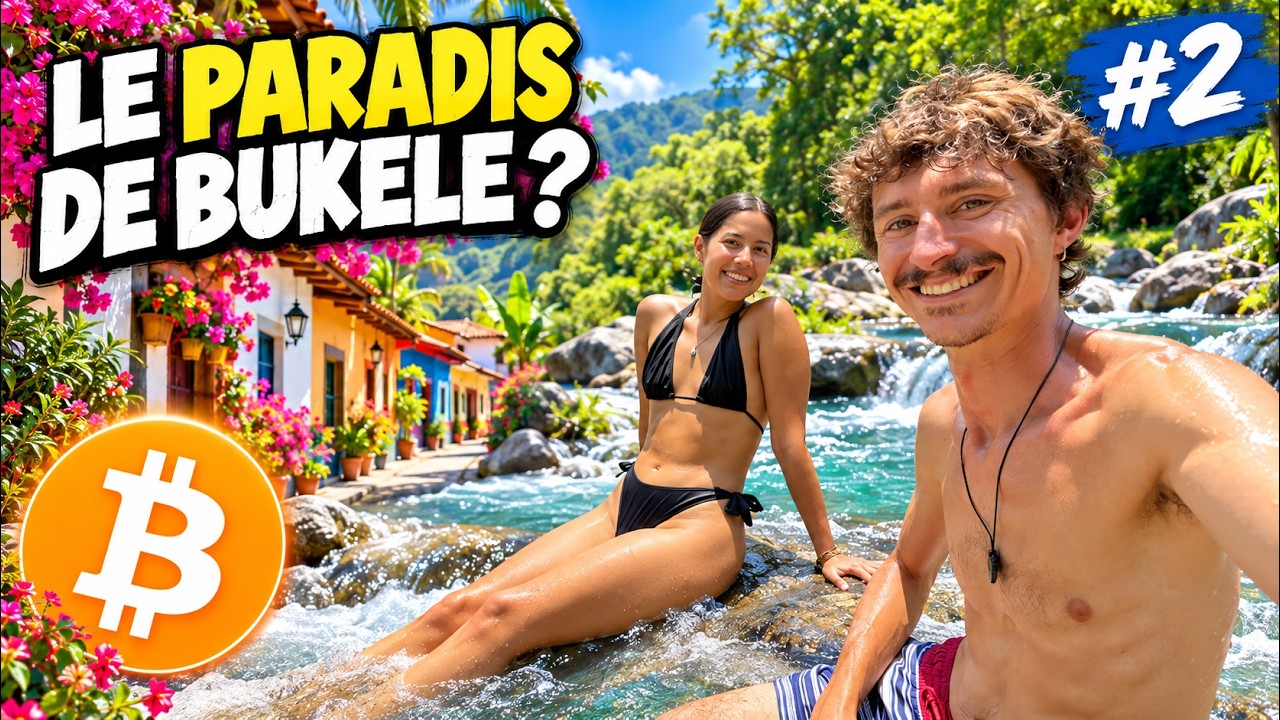
The Ruta de las Flores is a mountain road of about 35 kilometres, between Sonsonate and Ahuachapán. It runs through Nahuizalco, Salcoatitán, Juayúa, Apaneca and Concepción de Ataco: coffee-growing villages, crafts, murals and local food, up to nearly 1,500 metres above sea level at Apaneca. The flowers that give it its name bloom mainly from November to February: in May, when we were there, the road wasn't in bloom.
In Juayúa, the weekend food fair is a must: stalls everywhere, rabbit, dishes between $4 and $10. In Concepción de Ataco, we stumbled on a village festival, with its walls covered in murals and a storm late in the evening. It's much less hot and muggy there than in San Salvador, because you're at altitude. In Apaneca, a small family-run guesthouse agreed to let us pay for everything in bitcoin.
It's also the coffee route. El Salvador lived off coffee for a long time, and you can taste it: on a terrace along the road, we drank ours facing the volcanoes.
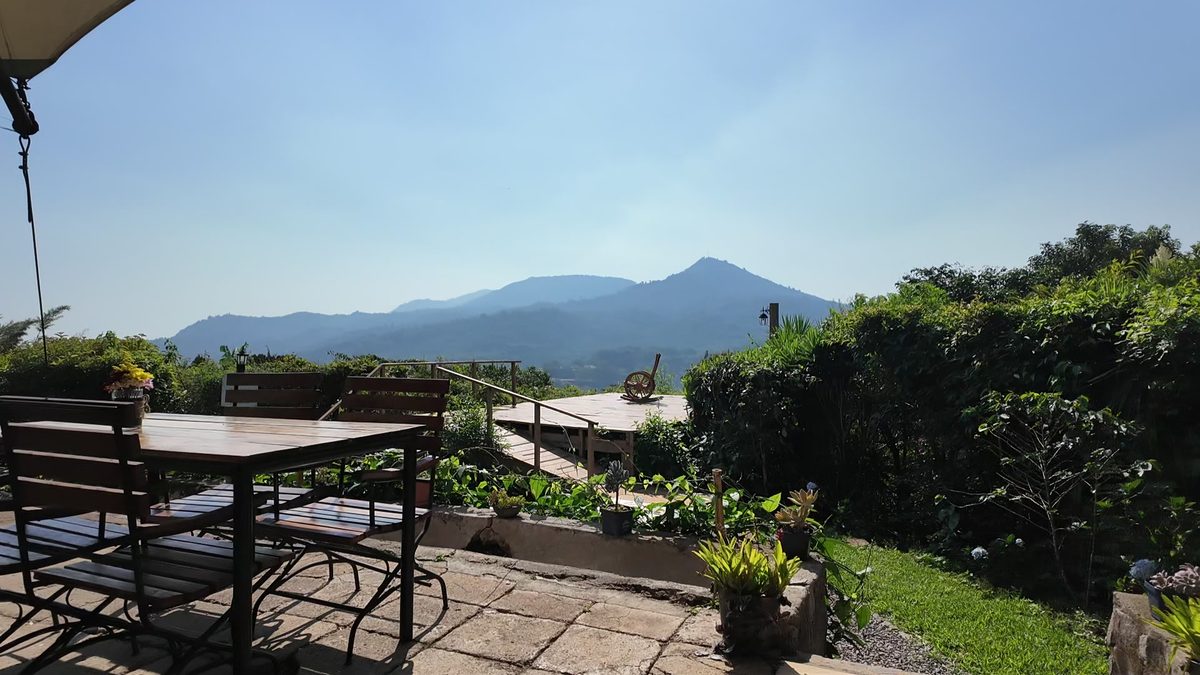
About twenty minutes from Ataco, near Ahuachapán, the Termales de Santa Teresa offer around thirty pools of natural hot water, just the thing to unwind after the drive. Their website publishes neither prices nor opening hours: an online guide gives about $10 for a day pass, to be checked before you go.
Berlín is a small town of about 20,000 inhabitants, more than 1,000 metres above sea level, in the east of the country. It's mostly known to bitcoiners: in three years, the Bitcoin Berlín project has persuaded more than 150 businesses to accept bitcoin, about a quarter of those in the town, according to CoinDesk. I go into it in detail in my article on bitcoin payments in El Salvador.
Nearby, the El Hoyón volcano gets about 700 visitors a year. No crowds: you go up with a local guide, because of the scorching fumaroles. Ours was called Don Julio, and we paid him in sats. Right next door, the Berlín geothermal power plant produces electricity from the volcano's heat, and has been mining bitcoin for the state since 2021.
A tip from our experience: with a small hire car, forget some of the dirt tracks. We wanted to get to some natural pools, and a 4x4 driver told us it would be far too much hassle with our car. Plan B: an improvised barbecue at the Berlin Pool Party.
Suchitoto is a small colonial town about fifty kilometres north of San Salvador, with its cobbled streets and tiled roofs. During the civil war, from 1980 to 1992, it almost emptied: 34,101 inhabitants in the 1971 census, 13,850 in 1992. It recovered through art and tourism, and today has about 22,700 inhabitants.
Below the town, Lake Suchitlán is an artificial lake, created in the 1970s by the Cerrón Grande hydroelectric dam. You can take a boat out to islands, including a bird island. We paid in bitcoin for entry to a viewpoint over the lake, had lunch by the water, then drank a smoked cocktail at Casa 1800, also in sats.
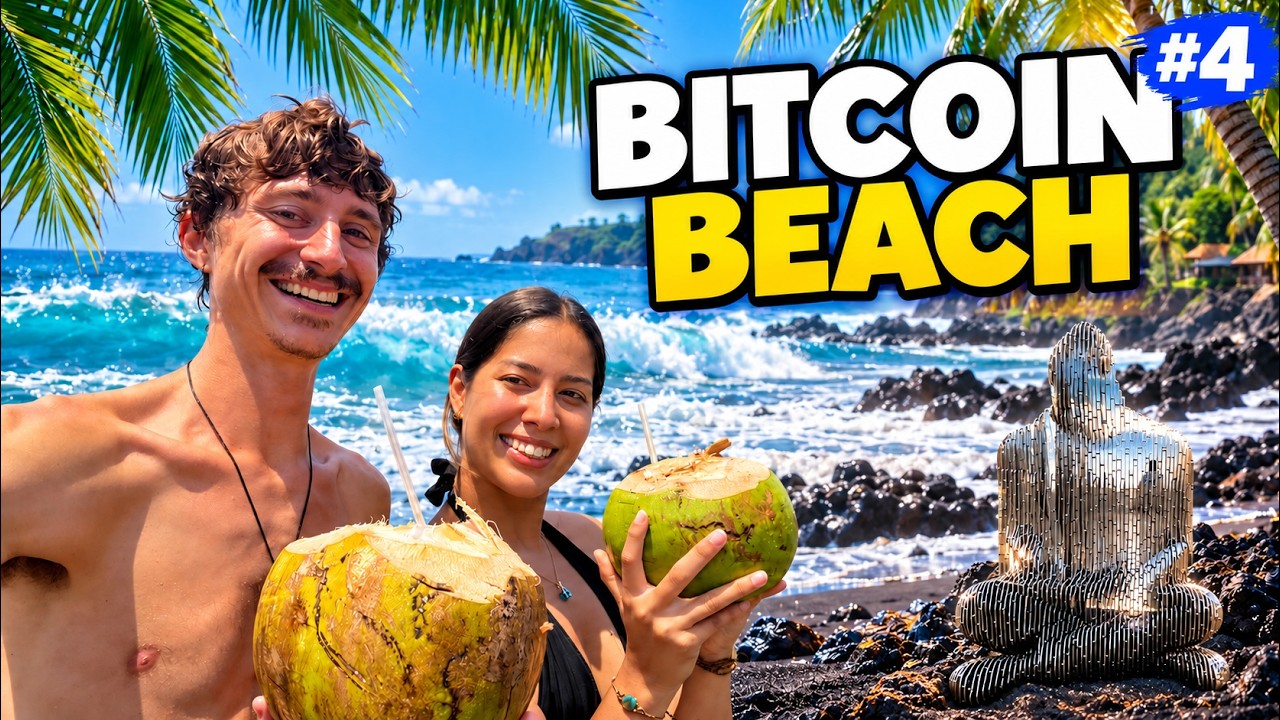
Last stop, the Pacific coast. We got there at night, after a long drive. El Zonte is a surfing village on a beach of black volcanic sand: seafood, fresh fish, surfing, sunshine. It's also where the Bitcoin Beach project was born, in 2019, and almost everyone there accepts bitcoin.
El Zonte is about fifty kilometres from both San Salvador and the airport, at kilometre 53 of the Litoral highway. The beach is part of Surf City, the tourism programme for the La Libertad coast, which on its own received 2.1 of the country's 4.1 million international visitors in 2025. Once there, we paid in sats at Mama Rosa's, one of the first shopkeepers to accept bitcoin, and for our dinner at Nan Tal.
For this itinerary, we hired a small car, a Hyundai i10. Our car hire company asked for a $1,500 deposit and premium petrol only. In general, you need to be at least 21 and have a credit card in the driver's name, on which the deposit is held. According to the Salvadoran press, a small car costs between $15 and $30 a day to hire. Petrol is paid for by the gallon, about 3.8 litres: in May 2026, the reference price for premium was around $4.75.
As for driving licences, a foreign licence is valid for a stay of less than 90 days. On the international driving permit, sources contradict each other: the Swiss motoring club TCS strongly recommends it, while the United Kingdom states that El Salvador doesn't accept it. Check with your car hire company.
According to the United Kingdom, the roads between tourist sites are good or reasonable, but many rural roads are unpaved, and Canada advises against driving at night between towns. We did it all the way to El Zonte without the slightest problem, but that's an experience, not advice.
Without a car, Uber works in Greater San Salvador, Santa Ana and San Miguel, and since 2025 in the departments of Cuscatlán, where Suchitoto is, and La Paz, where the airport is. Elsewhere, don't count on it. The public buses, the famous chicken buses, are advised against by the United Kingdom and Canada for safety reasons. Private shuttles link the main tourist sites.
El Salvador uses the US dollar. Here's what I really paid during those two weeks.
| Expense | Price paid |
|---|---|
| Three pupusas and a coffee, at the market, that day | $1 |
| Two bags of water | $0.25 |
| A speciality coffee in San Salvador | $2.48 |
| A hot chocolate at Good Beans | $3.30 |
| A dish at the Juayúa fair | $4 to $10 |
| Goat's milk at the market | $1 |
| A meal by Lake Suchitlán | $17.35 |
| A dinner at Finca Miramar, near Berlín | $22 |
| Our dinner at Nan Tal, in El Zonte | $71.50 |
| Our guide at the El Hoyón volcano | 37,778 sats, about CHF 24 at the May 2026 rate |
For accommodation, here's an official benchmark: in October 2026, the consumer protection office (Defensoría del Consumidor) recorded double rooms from $50 to $402, breakfast included, in 13 hotels in San Salvador. The same body recorded pupusas from $0.50 to $3.50 each.
The dry season runs roughly from November to April, and the rainy season from May to October. In 2026, the dry season officially began on 9 November. From November to February, it's also flower season on the Ruta de las Flores and coffee harvest season. The Pacific hurricane season, for its part, runs from mid-May to the end of November.
We were there in May, at the very start of the rains: hot and muggy in San Salvador, cooler at altitude, and a storm one evening in Ataco. As for festivals, Juayúa celebrates its Cristo Negro from 1 to 15 January, Ataco holds a coffee festival in March, and Suchitoto an arts festival in February.
Two weeks lets you see the capital, the Ruta de las Flores, Berlín, Suchitoto and the coast without rushing. The country is small, but mountain roads are slow: with one week, choose between the Ruta de las Flores and the east of the country.
It depends mainly on accommodation and restaurants. At the market, you can eat for a few dollars; in speciality coffee shops and beach restaurants, the bill soon goes up. Add the car hire, about $15 to $30 a day for a small car, and petrol.
For an itinerary like mine, it's the most practical option. Public buses are advised against by several countries, and Uber doesn't cover the whole country. Otherwise, private shuttles link the main tourist sites.
I answer in detail, with figures to back it up, in is El Salvador safe in 2026?
Leaving with 10,000 dollars in my pocket and seeing how far it goes.
A woman comes up to me in northern Scotland and introduces herself as Lady Luck.
Stained sheets, one euro to change them, and flowers instead of a stamp.
Follow MartinBTC: YouTube · X · Instagram · TikTok
Running a Bitcoin-focused project or channel? Let's talk.